How to become a private chef in France in 2026: path, status, training, procedures
24/06/2026
The profession of personal chef has changed profoundly in recent years. From a niche activity reserved for a few experienced professionals, it has become one of the most attractive entrepreneurial trajectories in the restaurant industry, driven by skyrocketing demand: families seeking personalized dining experiences, high-end vacation rentals, niche events (bachelorette parties, baby showers, Sunday brunches), and business dinners. According to several industry studies, the private chef market in France has been growing by 15 to 20 % per year since 2022.
But becoming a personal chef cannot be improvised. Beyond culinary talent — which is essential —, you must master a specific regulatory framework, choose the right legal status, understand health and safety obligations, and structure your business like a true entrepreneur. This comprehensive guide brings together all the up-to-date information for 2026: training pathways, available legal statuses, step-by-step administrative procedures, average income, and practical advice to get started successfully.
The private chef profession: what you really need to know before getting started
Before diving into the procedures, it is useful to clarify precisely what a private chef is in 2026, and how they differ from other catering professions.
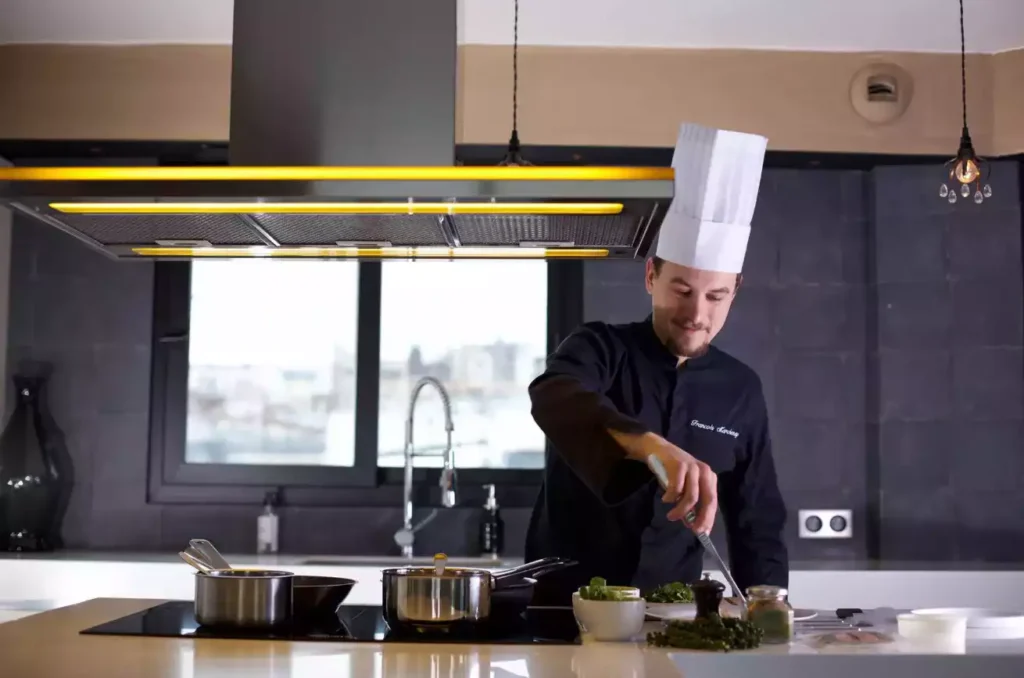
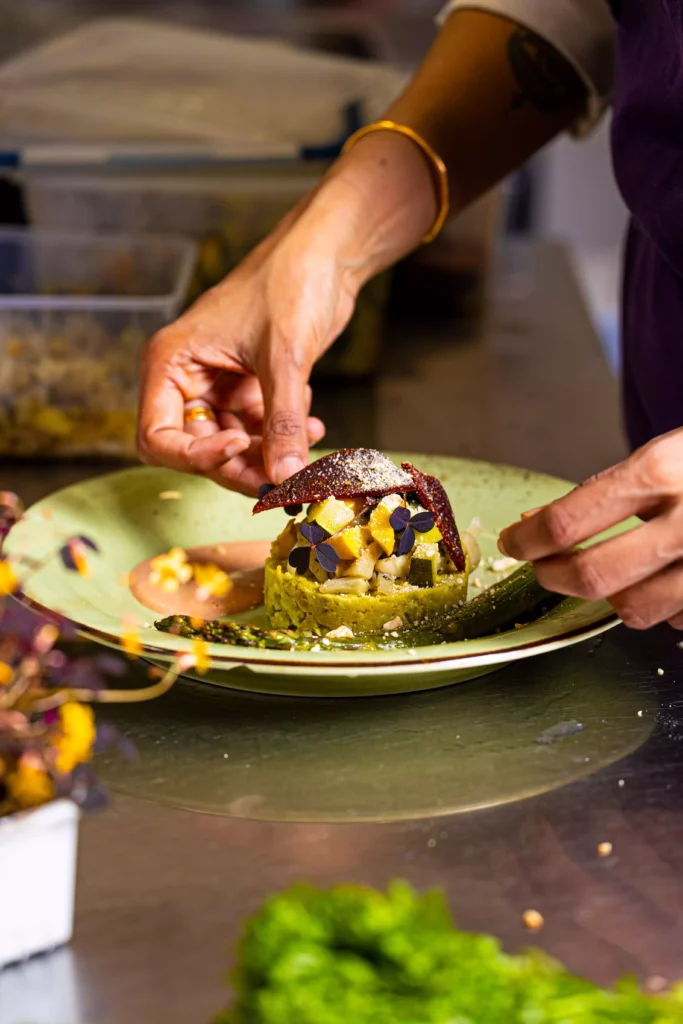
The private chef (also known as private chef or personal chef) is a culinary professional who travels to clients' homes to prepare a custom-made meal, serve him, and clean the kitchen after his work. He operates alone, sometimes accompanied by a kitchen assistant for large events, in the private kitchen or the rented venue (villa, chalet, reception loft).
This profession is clearly distinguished from caterer, who prepares the dishes in his own kitchen and delivers them. He also distinguishes himself from private chef, who works for a single family with an employment contract. To better understand the nuances between these professions, our private chef vs caterer comparison detail the differences seen from the client's perspective, which also sheds light on the positioning to adopt as a professional.
The profession requires a broad skill set technical culinary excellence, sense of service, ability to interact with a demanding clientele, organizational management (grocery shopping, transportation, timing), and of course independent entrepreneurial skills (quotes, invoicing, communication, cash flow management).
This is a profession that can be practiced in supplement to a main activity or main full-time activity. Depending on the chosen operating mode, the procedures and status choices differ.
What training programs are needed to become a personal chef?
Here is one of the particularities of the profession in France: It is not regulated. No diploma is legally required to work as a personal chef, unlike certain other food-related professions. This opens up several pathways, from the traditional academic route to pure experience.
The CAP Cuisine: the royal road
The CAP Cuisine is still here initial reference training to become a private chef. It is prepared in two years after the 9th grade (after middle school) in a vocational high school or an apprenticeship training center (CFA), and can also be obtained through continuing education, work-study programs, or evening classes for career changers. There are also state-recognized distance learning courses, sometimes eligible for the CPF (Personal Training Account), which allow people to take the CAP exam while continuing to work.
The CAP provides essential fundamentals: mastery of basic techniques (cutting, cooking, sauces, plating), product knowledge, workstation organization, and hygiene standards. It is a solid technical foundation that reassures future customers and constitutes a strong commercial argument.
The BTS, the vocational Bac and higher education
For those who want to go further, several paths are possible: Vocational High School Diploma in Culinary Arts (3 years old), BTS in Hospitality and Catering, Culinary Arts option (2 years after high school), bachelor's or master's degree in hospitality and restaurant management (3 to 5 years post-Bac). These programs open up broader career prospects (restaurant head chef, establishment management), but they are not necessary to work as a personal chef.
Prestigious schools like Le Cordon Bleu, Ferrandi, Institut Paul Bocuse or Ducasse School also offer globally recognized programs. These training courses are reputation accelerators, particularly useful if you are targeting high-end or international clientele.
Without a degree: the path of the experienced self-taught person
Since the profession is unregulated, it is entirely possible to become a private chef without an official diploma, provided they can demonstrate solid cooking experience. This is often the case for:
Former line cooks with several years of brigade experience who have not passed the CAP
Self-taught enthusiasts who have taken workshops, masterclasses, and short training courses
People undergoing career transition who have developed specific culinary expertise (pastry, Asian, vegetarian, Mediterranean cuisine)
For these profiles, the portfolio becomes the main weapon: dish photos, client testimonials, tasting videos, presence on social media. The client judges based on the coherence of the culinary universe much more than on the displayed diploma.
HACCP training: essential even if not mandatory
Here is a regulatory update often misunderstood. HACCP (Hazard Analysis Critical Control Point) food safety training is mandatory for caterers and restaurateurs who store and prepare food in their own establishment. For personal chefs who cook exclusively at the client's home, without storage or sales from their own home, this training is not not legally binding, according to Adie's practical guides.
Nevertheless, Following it is strongly recommended, and for three reasons: it protects you legally in the event of a dispute, it reassures demanding clients (particularly corporate and event clients), and it gives you the right reflexes regarding the cold chain, traceability, and good hygiene practices. Organizations like AFNOR Compétences, CCI Formation or several online platforms offer certifying HACCP training courses (generally 14 hours, around €200 to €400), sometimes eligible for the CPF.
What legal structure to choose to work as a private chef
Choosing the legal structure is one of the key decisions when launching a business. Four main options are available in 2026.
The micro-enterprise (sole proprietorship / self-employed)
That is by far the most chosen status by personal chefs at the start of their activity, and for good reason: ease of creation (15 minutes online at autoentrepreneur.urssaf.fr), streamlined administrative procedures, simplified accounting, monthly or quarterly revenue reporting, and the option for source-deducted income tax.
Turnover cap in 2026 €77,700 excluding tax for a service provision activity (APE code 56.21Z – Catering services).
Limits this status does not allow professional expenses (supplies, travel, equipment) to be deducted from the taxable income; social security contributions are calculated on gross turnover. As the business grows and professional expenses become significant, it becomes relevant to switch to another status.
Noted : As of July 1, 2026, the ACRE (Aid for Business Creation and Takeover) program applies at 75 % of the standard social security contribution rates for micro-entrepreneurs in their first year, representing a significant savings for new business owners.
Sole proprietorship
The EI is an alternative to the micro-business for those who exceed the ceiling or who wish to deduct their professional expenses. It allows for benefit from a real tax regime (deduction of actual expenses), while remaining simple to manage.
Since the 2022 reform, the entrepreneur's personal assets are automatically protected professional debts, which eliminates one of the major historical disadvantages of this status.
Recommended for private chefs with a medium volume of business (€50,000 to €150,000 in revenue) who have significant professional expenses.
The EURL (Single-Member Private Limited Company)
The EURL is a form of single-member SARL. It provides a enhanced asset protection, increased credibility with corporate clients, and tax flexibility (choice between income tax and corporate tax).
Recommended for growing private chefs targeting a significant B2B clientele (corporations, high-end events), who want to hire a line cook, or who are developing ancillary activities (group cooking classes, product sales).
The SASU (Simplified Joint-Stock Company with a Single Shareholder)
The SASU is the most modern and flexible form. It offers a remuneration in the form of dividends possible, an assimilated employee president status (high social contributions but enhanced social protection), and great statutory flexibility.
Recommended for private chefs who are developing a significant structure, who wish to open up their capital in the long term, or who want to maximize their social protection.
To help you choose, the single window (formalites.entreprises.gouv.fr) offers free support. The Chambers of Commerce and Industry (CCI) and the Chambers of Trades and Crafts (CMA) also offer free consultation hours for business creators.
Step-by-step administrative procedures
Here is the concrete sequence of steps to follow to launch your business.
1. Define your project and your status. First and foremost, clarify the positioning (general or specialized cuisine, price range, geographic area), the chosen legal status, and the trade name. This is the most important reflection step.
2. Register your business on the single window. All business creations are now done on formalites.entreprises.gouv.fr. Allow 15 to 30 minutes for a micro-enterprise, and several days for a company requiring the drafting of articles of association. You will obtain a SIRET number within 8 to 15 days.
3. Choose the APE code. The recommended APE code for a private chef is the 56.21Z – Catering services, which largely covers the activity.
4. Open a professional bank account. Mandatory for companies (EURL, SASU), highly recommended for micro-entrepreneurs exceeding €10,000 in annual turnover for two consecutive years. Several neobanks (Shine, Qonto, Blank) offer accounts tailored for freelancers starting at €0 the first year.
5. Take out professional liability insurance (RC Pro).Indispensable, even though it is not legally mandatory for a private chef. It covers you in the event of food poisoning, property damage in the client's kitchen, or a dispute regarding the service. Expect to pay 200 to 600 € per year depending on the coverage.
6. Complete your HACCP training (recommended). As mentioned above, it is an investment that quickly pays off in terms of credibility and peace of mind.
7. Prepare your sales materials. Website (or presence on platforms like Guide MyTable), professional photo portfolio, standard quotes, general terms and conditions of sale, pre-filled invoices.
The regulatory and health obligations to be met
Even though the profession is not strictly regulated, several obligations govern the practice.
Food hygiene strict adherence to the cold chain (transport and storage temperatures), product traceability, separation of raw and cooked foods, hand and equipment hygiene. Keeping a supplier traceability logbook is a recommended best practice.
Food transport : use of insulated containers, professional coolers, or refrigerated vehicles if the service requires it. For short distances, quality insulated containers are sufficient.
Professional liability insurance moral (non-legal) obligation to take out insurance. Most matchmaking platforms (including Guide MyTable) require an up-to-date professional liability insurance (RC Pro) certificate to list a chef.
Billing : issuance of invoices complying with the French Commercial Code (VAT number if applicable, mandatory legal notices). For micro-entrepreneurs below the VAT exemption threshold (€37,500 excluding tax), the statement «VAT not applicable, art. 293 B of the CGI» must appear on the invoices.
Turnover declaration monthly or quarterly for micro-entrepreneurs (on autoentrepreneur.urssaf.fr), annual for companies.
How much does a private chef make in France in 2026?
This is one of the most frequent questions from aspiring personal chefs. The answer depends on many factors, but here are the ranges observed in 2026.
According to industry data, the median salary of a private chef in France is around €3,000 to €3,500 net per month, for a full-time activity. Beginning chefs often start between €1,800 and €2,500 net per month, while experienced profiles with a loyal clientele reach €5,000 to €8,000 net per month. Some very well-established chefs, particularly in Paris and on the Côte d'Azur, exceed €10,000 net per month.
The concrete calculation : a personal chef charges on average €70 to €130 per person for a gourmet dinner in France (see our complete guide to private chef pricing 2026 (for details by city and package). For a typical event serving 8 people at €100 per person, the chef receives €800, from which approximately 30–40 % in costs (ingredients, transportation, social security contributions) must be deducted. This leaves €480 to €560 net for the event. By hosting 12 to 16 events per month, a chef can achieve a solid monthly net income.
The main variables : the geographic area (Paris, the Côte d'Azur, and luxury resorts pay more), specialization (Michelin-starred or highly trained chefs charge more), customer loyalty (regular clients reduce the acquisition cost), and service diversification (adding cooking classes, corporate services, matching platforms).
How to find your first clients
This is the big launch challenge. Here are the channels that actually work in 2026.
Matchmaking platforms. Sign up on specialized platforms like MyTable guide that connect chefs and individuals. Advantage: flow of qualified requests, geographical visibility, support in structuring your offer. It is often the most effective channel for the first six months of activity.
Local word-of-mouth. Your first customers are often your friends and family and their network. Offer your first customers an impeccable service and systematically ask for a testimonial and a recommendation.
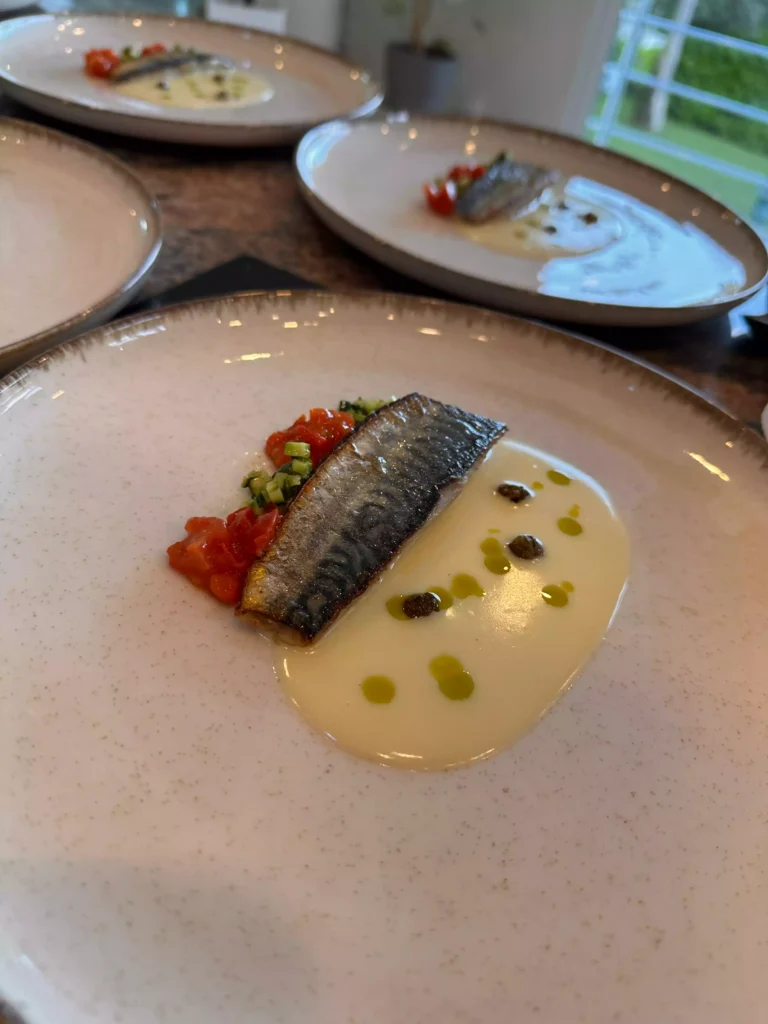
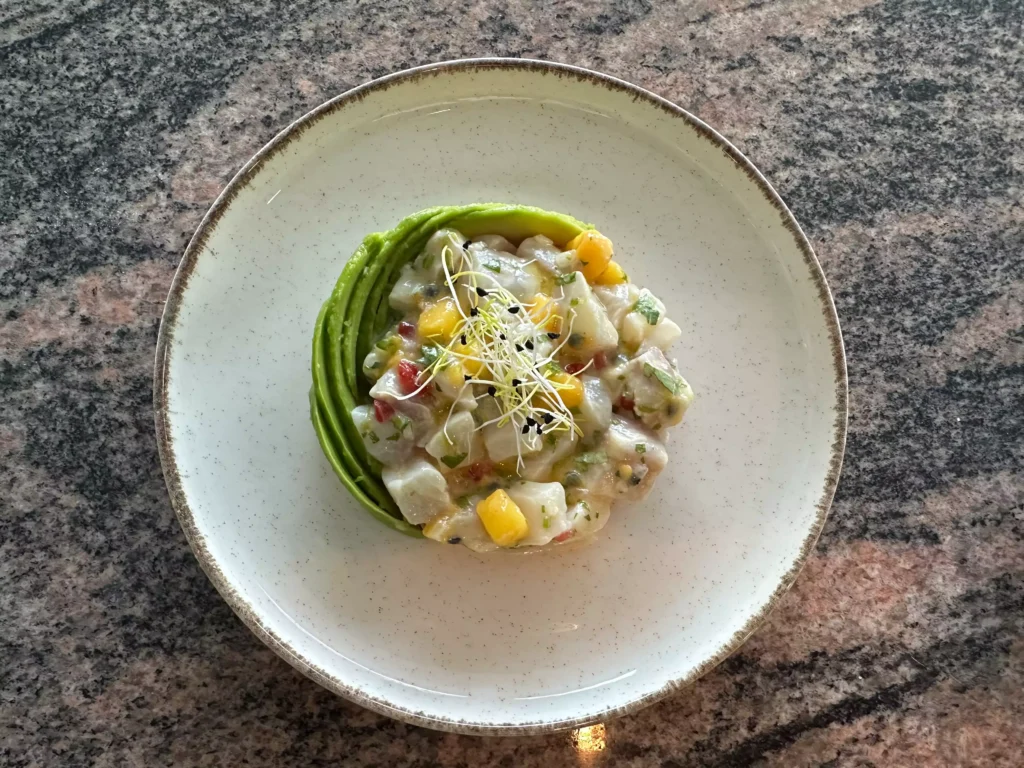
Visual social networks (Instagram and Pinterest). Being a private chef is a very visual profession: professional photos of your dishes, plating, and table settings convert much better than a long speech.
The partnership with high-end vacation rentals. Rental agencies in Provence, on the Côte d'Azur, in the Luberon, and in Megève often offer concierge services to their clients. Getting listed with these agencies opens up a steady stream of services during the high season.
Professional events and corporate event planning. Prospect local businesses for their client dinners, executive breakfasts, and seminars. It is a more demanding clientele, but one that is loyal and pays well.
Culinary talent is essential, but it is not enough. Here are the skills that truly make the difference between a successful chef and one who struggles to grow.
A strong sense of service and active listening. Understanding the customer's expectations, sensing the opportunity, feeling the atmosphere, adjusting the pace. That is what transforms a good service into a memorable moment.
Mastery of written communication. Clear quotes, carefully drafted menu proposals, responses to requests in less than 24h. An important part of conversion happens in the quality of the written exchange before the service.
Organization and time management. Plan shopping trips, optimize travel, stick to schedules, and manage multiple services within the week. Without rigorous organization, the business quickly becomes unmanageable.
Financial management. Keep simple yet up-to-date bookkeeping, anticipate quarterly expenses, smooth out cash flow during high and low seasons, and invest in the right equipment without overinvesting.
Culinary curiosity. A chef who doesn't evolve gets left behind. Following trends (sustainable cuisine, fermentation, forgotten vegetables, world cuisines), tasting, reading, training continuously. This is what maintains the value perceived by customers.
Pitfalls to avoid when starting out
Some classic mistakes can permanently hinder the development of a business.
Undercharging at the start. The most common mistake. Out of fear of not getting clients, many novice chefs charge 30 to 40 % below market rates, creating a reputation as a «cheap chef» that’s very difficult to shake later on. It’s better to charge the right price from the start and adjust slightly if necessary.
Accept all requests. Trying to do everything (birthdays, weddings, catering, brunches, corporate events, cooking classes) at the start dilutes your positioning and complicates communication. It is better to focus on two or three formats that you master perfectly.
Neglecting the image and portfolio. Amateur photos of poorly lit dishes on a phone are a guarantee not to convert. Investing in 2 or 3 professional photo shoots in the very first year is one of the best returns on investment.
Working without a contract or down payment. Always have a quote signed, request a deposit (30 to 50 %), and clearly outline the refund terms in case of cancellation. Otherwise, you will bear the commercial risk alone.
Isolate oneself. The job can be lonely. Joining professional communities (chef groups on social media, trade unions, local associations) makes it possible to discuss best practices, share contacts, and stay motivated.
A demanding yet fascinating profession, accessible to various profiles
Becoming a private chef in France in 2026 means committing to a profession that combines culinary passion and entrepreneurial adventure. The regulatory framework is relatively flexible—no mandatory diploma, accessible legal statuses, simplified administrative procedures—but success depends on a set of skills that go far beyond cooking.
To succeed, three pillars: a clear positioning (who am I, who am I cooking for, what universe do I carry), administrative and health rigor (adapted legal status, professional liability insurance, recommended HACCP training), and a consistent visibility strategy (platforms, social networks, local partnerships). With these solid fundamentals, the profession offers real professional independence and attractive income potential, particularly in large cities and tourist areas.
Are you a chef looking to grow your in-home dining business? Discover the matchmaking program MyTable guide and join a community of verified chefs across France.